

MACHU PICCHU
Machu Picchu remains one of history's great unsolved mysteries — was it a sacred ceremonial site, a royal retreat, or a military stronghold? Built without wheels, iron tools, or a written language, the Inca fit massive stones together with such precision that many walls still stand without a trace of mortar.
Whichever theory you find most compelling, arriving at this citadel in the clouds is one of South America's most extraordinary travel moments — and we design every route there, on foot or by rail, around comfort as much as adventure.
Lodge-to-Lodge Trekking
This is our signature way to experience Machu Picchu, and the most immersive route to the Lost City. Choose a 5- or 7-day trek through the Andes, each day building anticipation for that first glimpse of the ruins.
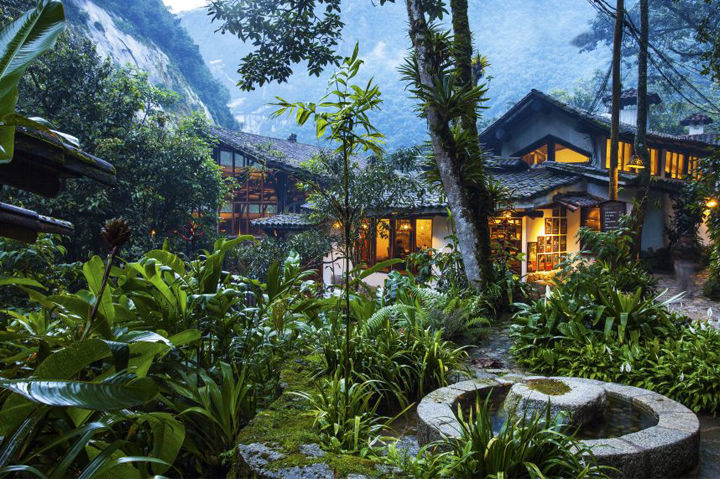
Luxurious Mountain Lodges
Rather than tents, each night ends at a private mountain lodge — the reward for a full day on the trail. Your route winds through remote Andean villages, half-forgotten Inca ruins, and open pasture dotted with alpaca herds by day; by evening, you'll unwind in a hot tub, enjoy refined Peruvian cuisine, and watch the stars come out over the mountains.

The Crown Jewel
Arriving at Machu Picchu after days on the trail gives the experience a weight that no train ride can match. Days of climbing give you a real appreciation for the ambition behind this site — by the time you reach it, the flawless stonework and sweeping terraces feel less like a nice view and more like a genuine marvel of engineering.

The Inca Trail
For the ultimate adventurer/outdoorsman, tackle the trek up the Sacred Valley of the Incas as closely as possible to the ancient Incans. Enjoy the fresh mountain air and the stunning star shows sleeping outside.

Vistadome Train
If high altitude trekking isn’t your thing, or you don’t want to spend a whole week visiting Machu Picchu, the train is a great option to cut out time and lots of sweat! Roughly a four-hour ride from Cusco to Machu Picchu, the vista-dome train has windows not just on the sides, but on the roof as well so you don’t miss any of the stunning views. It can be done as a day trip but we recommend a three-day, two-night immersion to get the most out of your trip to this historic monument.
When to Visit
Peak season runs July through August, coinciding with the dry season and school holidays. January and February bring the heaviest rains and occasional trail closures from muddy conditions. November and April are excellent alternatives — you'll avoid the biggest crowds while staying ahead of the weather.
Dry Season (May – November)
-
High/low temperatures: 65°F / 32°F
-
Average sun: 7.5 hours per day
-
Rainfall: under 1 inch
Wet Season (December – April)
-
High/low temperatures: 65°F / 43°F
-
Average sun: 5 hours per day
-
Rainfall: around 5 inches
A Brief History
Machu Picchu remains one of archaeology's great puzzles: even now, no one fully understands its original purpose, or precisely how the Inca built at such scale and precision so high in the Andes with such limited tools.
The site was built around 1450 under the rule of Pachacuti Inca Yupanqui, the first Inca ruler to expand the empire beyond Cusco. Whatever its exact function, it stood as a clear symbol of Inca power to any rival who saw it. Pachacuti conquered the Cusco valley before turning south toward Lake Titicaca, and upon his death in 1471 was mourned, by his own wish, for a full year. His son continued the empire's expansion in his place.
Machu Picchu was abandoned during the collapse of the Inca Empire in the 1530s. Spanish conquistadors took control of Inca territory but never located the citadel — its existence was preserved only by local communities, who kept its location a closely guarded secret for centuries.
The site was reintroduced to the world in 1911 by American explorer Hiram Bingham, guided to the ruins by local muleteer Melchor Arteaga. Today, Machu Picchu draws nearly 1.2 million visitors a year — a testament to a site that still keeps many of its secrets.

